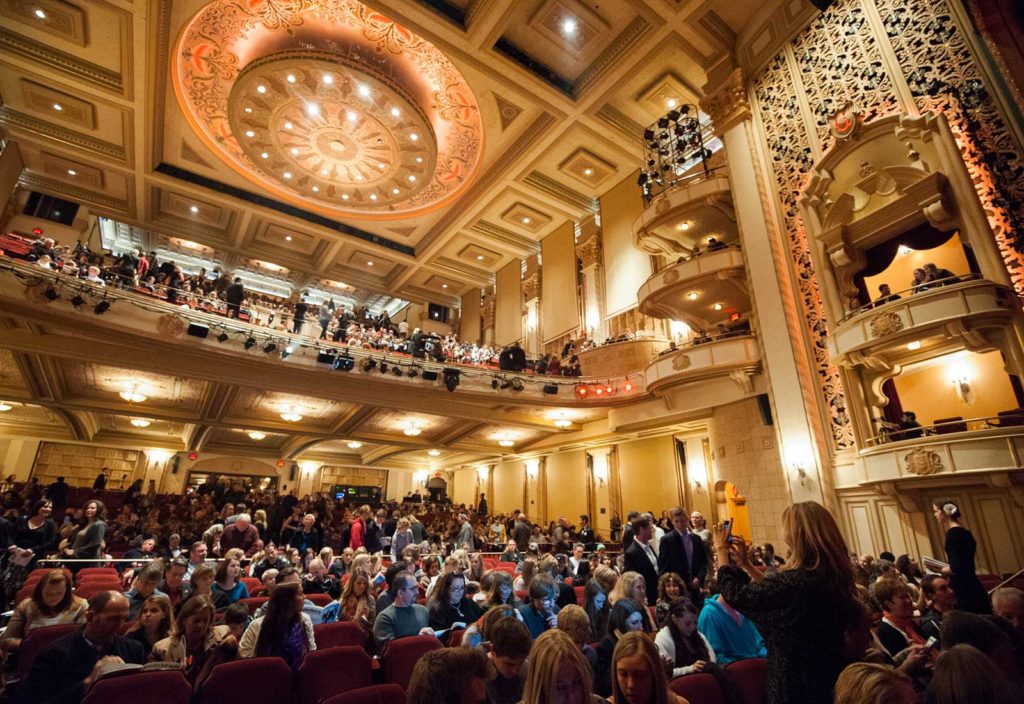


The lights dim, a hush descends on the audience, and the curtain at The Granada Theatre rises. In the audience, 10-year-old Kaitlyn sits wide-eyed, mesmerized by the festive Christmas Eve scene unfolding on stage, where children dance and a man presents one of them with a magical Nutcracker. This moment isn’t just memorable for Kaitlyn; research shows it may actually make her a better student.
The Core Evidence
For decades, many schools reduced field trip budgets, often viewing time away from the classroom as lost instructional time. However, researchers have since found the opposite to be true.
A recent study by Heidi Erickson, Angela Watson, and Jay Greene found that fourth- and fifth-graders who attended field trips to a live theater performance, a symphony concert, and an art museum scored higher on exams, received higher course grades, were absent less often, and had fewer behavioral problems at school.
The study was built on earlier research by Greene at the University of Arkansas, showing that students exposed to live theater have enhanced knowledge of plot and vocabulary, a stronger ability to read emotions, and a greater understanding and acceptance of different types of people.
Not only did field trips not hurt academic performance, but they also positively impacted grades and desirable behaviors.
Building Social Skills
In today’s world, helping children understand others and engage with different perspectives is increasingly important. Theater is uniquely positioned to build this skill in young audiences.
When a child spends two hours watching real humans express emotions, it creates an emotional engagement that a child doesn’t get watching a screen or even reading a book.
A recent study measured how empathy and the ability to see another’s point of view were impacted by watching live theater. Interestingly, the students were divided into groups where some simply saw the show, while others read the book before or engaged in a post-show discussion, or both. The results showed that pairing the show with another activity produced the largest increase in empathy and social perspective.
Expanding Vocabulary and Critical Thinking
Live theater often exposes children to new vocabulary, from Shakespearean dialogue to musical storytelling. Following the story with no rewind buttons requires focused attention and deep concentration. During shows, kids are flexing the same cognitive muscles needed for reading comprehension, analytical writing, and critical thinking.
Teachers often observe that live theater drives more thoughtful in-class discussions on the subject than simply reading or watching a play.
Reviving Hope
In a landmark study by WolfBrown and The New Victory Theater in New York, researchers tracked children in underserved communities with no arts programming. An unexpected result of the study was that children who engaged with the performing arts were more optimistic about their futures, including their likelihood of attending college, than the control group.
Leveling the Playing Field
For students from low-income or rural areas, a school field trip is often their only opportunity to experience the performing arts. With the proven scholastic and behavioral outcomes of attending live theater, exposure for all students is imperative.
Compared to many educational supports, from remedial programs to one-on-one tutoring, field trips to live performances offer a simple and engaging way to support student learning.
The Granada’s Community Engagement efforts have helped students experience the magic of live theater.
“We hear from teachers the inspiration students feel after seeing a live show or participating in one of our educational production tours,” said Drew Davis, Associate Director of Development at The Granada. “We hope to continue to expand our Community Engagement efforts so students have the opportunity to participate in the performing arts regardless of family income.”
Back in the darkened theater, Kaitlyn sits transfixed as she’s ushered off to Land of Sweets to meet the Sugar Plum Fairy. Kaitlyn isn’t thinking about reading comprehension or test scores; she just knows she can’t tear her gaze from the performance. But come Monday, Kaitlyn’s teacher might notice a change; a question asked or a keen observation.
Eventually, The Granada’s curtain drops, but what the show raised in Kaitlyn stays open long after the performers leave the stage and the kids are back on the bus to school.