


This April, Hadestown is set to dazzle Santa Barbarans with its intertwined love stories. But before King Hades or Orpheus takes the stage, a different kind of performance unfolds behind the scenes.
When a Broadway or large-scale production comes to The Granada Theatre, it sets in motion a precisely choreographed effort as crews, technicians, and staff work in sync to bring the touring show to life.
“There are a lot of moving pieces and people,” explains Christina Gonzalez, Vice President of Human Resources at The Granada. “You don’t realize the production within the production. It’s inspiring to watch.”

Christina Gonzalez
The Starting Point
Before a show is booked, the rider outlining details of what the touring production needs is reviewed by Stephanie Boshers, Director of Stage Production & Operations, to ensure that The Granada has the space, time, budget, and resources to host the show.
She works closely with Michael Hudgens, Senior Production Manager for the American Theatre Guild, a resident company of The Granada Theatre, and also the company that helps Broadway take its shows on the road.
“For my part, I often ask myself, ‘ What question hasn’t been asked, yet?’” said Hudgens. “If there is a need for the show or the venue that will make for an easier day, I want to make sure that it has been addressed and planned for in advance. Every issue can be resolved, but no one likes surprises.”

Michael Hudgens
To keep those surprises at bay, Boshers’ real work begins four to six weeks before the show. She coordinates with the promoter representative, such as Michael Hudgens for Broadway tours, along with The Granada’s technical coordinator, front-of-house managers, and various tour contacts to ensure everyone is on the same page. A production sheet is created, and a labor request is shared with the International Alliance of Theatrical Stage Employees (IATSE) Local 442 to engage the additional staff needed for the show.
Building the Crew
One of the most surprising things is that for a large production, a lot of additional local staff is needed.
“Depending on the show, we might need anywhere from five to 60 people, ranging from stagehands and wardrobe support to department heads,” said Gonzalez.
Once hired by The Granada, the union workers become employees of the theater.
“They aren’t temporary workers,” explained Gonzalez. “Our Local 442 does an amazing job, and once people are part of our team, whether they’re working in the office or with the stage, we all work together to ensure that everyone is supported. That’s the collaborative environment that The Granada has.”
Pre-Hang Day
The physical work to prepare The Granada to receive a touring production starts a day or more before the show arrives.
“This day is known as pre-hang day,” said Boshers. “Based on what the rider needs, the stage crew will work to make The Granada ready to accept the equipment that is coming with the tour.”
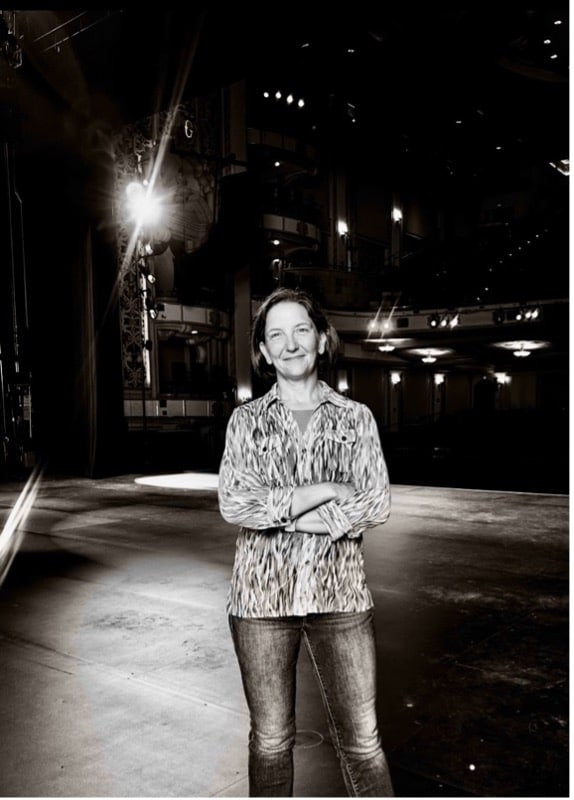
Stephanie Boshers
During pre-hang day, crews may need to move curtains, add or move lighting, lay a dance floor, or set up the orchestra pit.
Everything needs to be ready for the frantic load-in day.
Load-in Day
Load-in day is the show within the show. Choreographed and controlled chaos to the outside observer, but a well-oiled machine to those doing the work. This is the day the tour arrives, and everything must go from truck to theater.
“It’s not unusual for me to start getting phone calls from the truck drivers as early as 5:00 am asking for directions or specifics about where they can and cannot park,” said Boshers. “There have been a few times where I’ve had to go on a hunt for a lost truck and lead them back to the theater.”
Once Boshers arrives at the theater around 7 am, she is like a conductor leading her orchestra.
“As I make my way to the stage door, I will greet the truck drivers, chat with them about the plan for the day and then head into the theater to meet with my Technical Coordinator, Dan Lyon, to confer about last minute items, take a look at the schedule, ensure that we have sign in sheets for the crew, and start talking to the tour leads who start wandering into the building,” she explains.
From there, it’s a safety talk for all and backstage tours to orient the crew with the theater.
The Dance
Everyone has a different task as the long process of unloading the trucks and moving the boxes into place unfolds.
Riggers mark the floor for chain motors and begin dropping ropes from the grid upstairs. At the same time, audio teams connect the board to its cables, and wardrobe boxes, called gondolas, are opened so costumes can be aired, washed, and steamed before being placed in the dressing rooms. Scenery is hung and assembled, while lighting is flown and connected to power and data.
“There is a dance of sorts as everyone works around each other. It’s extremely busy, and a little chaotic to watch, but there is a definite rhythm and pattern to the work,” said Boshers. “By mid to late afternoon, all of the equipment has been loaded in, lighting is being focused, audio is being tested, and cues are being run for the evening’s performance. What was in a box in a truck at 8 am is now ready to be used as part of that evening’s 7:30 performance!”
The Payoff
What was in a truck 12 hours ago is now a fully realized Broadway production. The audience files in, unaware of everything that happened throughout the day to make the show possible.
“The audience won’t see the 16-hour day for the crew or the challenges they faced throughout the load-in; they’ll only see something that might feel a little like magic, and hopefully something they’ll always remember,” said Hudgens.
Then the lights dim, the curtain rises, and the work of hundreds of people across months of preparation is ready for its starring role.